
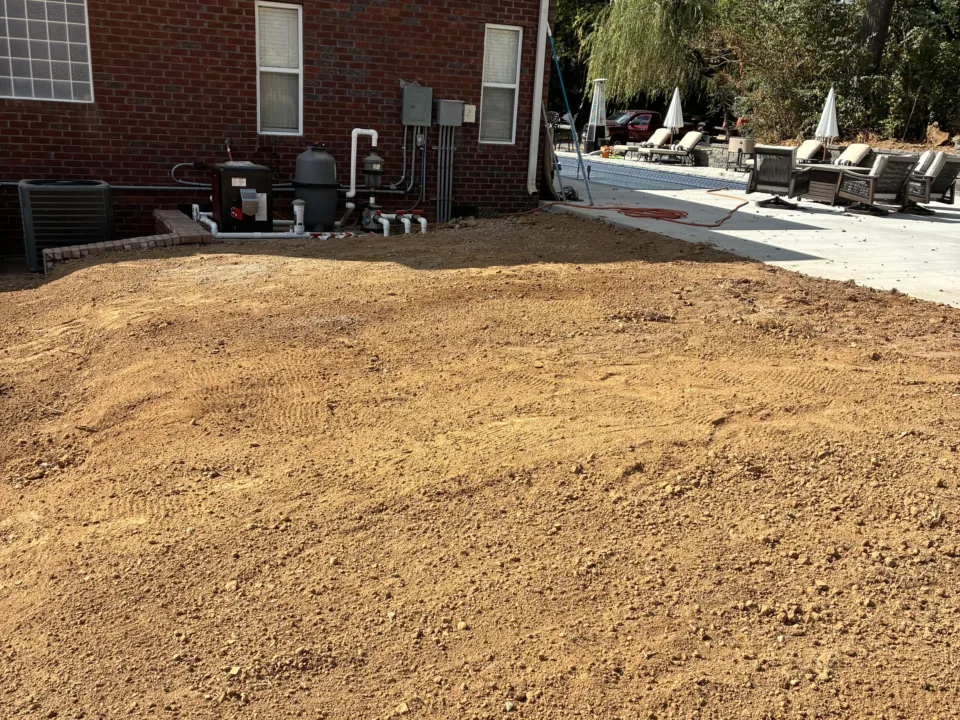
How Much Does Yard Leveling Cost in Tennessee?
Most homeowners pay $1,022 to $3,329 to level a yard, one national cost guide reports for 2026. Its average is $2,175 across 5,354 projects. A second national guide gives $500 to $5,000 as the usual yard grading cost.
We did not find a Tennessee survey of yard leveling cost. These national numbers are the closest frame we have. A whole yard with a lot of dirt to move can run well past them.
These are market numbers, not our price list. For land grading and yard leveling around Pleasant View, we look at the job and put the quote in writing.
What Do Published Yard Grading Costs Look Like?
The table holds published market numbers, not our price list. None of these rows is a Tennessee figure.
| What is priced | Published range | Source |
|---|---|---|
| Level a yard, typical job | $1,022 to $3,329, average $2,175 | 2026 national guide |
| Level a yard, older figure | $1,006 to $3,237, average $2,122 | 2023 national guide |
| Grade a yard, typical job | $500 to $5,000, average $2,300 | Second national guide |
| Finish grading, per square foot | $0.40 to $1.00 | Second national guide |
| Rough grading, per square foot | $1 to $2 | Second national guide |
| Land grading, per acre | $17,400 to $43,600 | Second national guide |
| Labor alone, per hour | $50 to $100 | 2026 national guide |
| Machine and operator, per hour | $100 to $300 | Second national guide |
| Fill dirt, per cubic yard | $5 to $25 | Second national guide |
| Topsoil, per cubic yard | $10 to $50 | Second national guide |
The top two rows share a root. The 2023 guide credits the publisher of the 2026 guide, so read them as one data line, three years apart.
Finish grading smooths the top 1 to 3 inches of soil. Rough grading takes out a slope or shapes the yard for drainage.
The hourly rows measure different things. The labor row comes to $600 to $2,400 on a full project of 12 to 24 hours. The machine row is for an operator who brings a skid steer or mini excavator.
What Drives Land Grading Cost?
Six things move a yard up or down those market numbers.
- The area. At the rates above, 1,000 square feet comes to $400 to $1,000 of finish grading. Rough grading on that area runs $1,000 to $2,000.
- How much dirt moves. A bigger change in height costs more. The 2023 guide prices 1,000 square feet at $1,000 to $1,200 for 1 foot of change. At 5 feet of change, it lists $2,200 to $2,400.
- Fill or topsoil coming in. Dirt from your high spots can fill your low spots, and that cuts what gets hauled in. The second guide lists a delivered truckload of fill at $150 to $400, about 10 to 14 cubic yards. Rough spreading adds $200 to $400, and many grading contractors bill the dirt apart from the grading.
- Access. Machines and trucks have to reach the ground. Walls, sheds and boulders in the way can make a job more costly, the 2023 guide notes.
- Brush that has to clear first. Land must be cleared before leveling, and the 2026 guide lists that step at $1,300 to $5,700. Thick growth calls for brush clearing, and our guide to what land clearing costs per acre covers bigger ground.
- Drainage. Water decides where the dirt has to go. The second guide lists $500 to $1,000 to fix one side of a foundation. Grading around a whole house runs $1,000 to $3,000.
What Does It Cost to Level a Low Spot Versus a Whole Yard?
A small low spot sits near the bottom of the range. The second guide lists small grading projects at $500 to $1,000. That row covers a patio-sized area or the ground along one foundation wall.
A whole backyard sits higher. The same guide’s large project row runs $1,000 to $5,000, and a quarter acre lot runs $4,400 to $10,900. At rough grading rates, 5,000 square feet comes to $5,000 to $10,000.
Small jobs need little dirt. One cubic yard covers about 55 square feet at 6 inches deep. So a 220 square foot low spot at that depth takes about 4 yards. That is $20 to $100 of fill at the market rates above.
Delivery can cost as much as the dirt. The second guide lists topsoil delivery at $50 to $150 a trip. Some orders carry a 10 to 20 yard minimum, so ask whether your high spots can supply the dirt.
How Does Middle Tennessee Ground Change the Job?
NOAA’s climate normals give Nashville about 50 inches of rain a year. Around Pleasant View, federal soil maps show mostly silt loam over clay. Much of it is gravelly with chert, the hard rock chips common on the Highland Rim.
Chert can push a job up the range, since the second guide prices rocky soil at the higher end. Rain soaks into this clay slowly, so a hard rain runs across the top and finds the low spots. Wet clay smears and ruts under the tracks, so grading goes easier on dry ground.
Some soggy yards have a soil problem below the grade. On flatter ground mapped as Dickson silt loam, federal records show a dense layer 18 to 36 inches down. Water passes through it slowly, and grading will not drain it. A buried drain is another trade, so ask about that before you pay to level the spot.
Do You Need a Permit to Level a Yard in Tennessee?
It depends on the size of the job and the address. TDEC, the state’s environment department, asks for a construction stormwater permit when clearing or grading disturbs one or more acres. A smaller site can need one too if it is part of a larger plan of development or sale.
Local rules can reach smaller jobs. Outside town limits, Cheatham County requires a grading permit when work changes water flow onto or off another person’s land. Its application fee is $50 plus a $5 archive fee. In White House, a land disturbance permit starts at 5,000 square feet.
Rules change by county and town, so your local codes office answers the question, and we point you there. Tennessee’s dig law covers grading too. Utility lines get marked through Tennessee 811, which asks for at least three working days of notice.
How Do You Get a Written Quote for Your Yard?
Every number above is a published market figure or simple math on one. We price each yard after we see the ground, and the quote comes in writing. Watch the yard during a hard rain first, and take photos of where the water stops.
Phillips Land Services does this work with a compact track loader and a bucket. We bring the machine and run it, from a few hours of skid steer services up to a whole property. Jobs that are mostly fill and topsoil fall under dirt work.
For the full picture, read about yard grading for low spots and drainage. You can also call or text (931) 265-1151 and tell us about the yard.